

Lizzy Greene | Mental Health First Aid Director | 5 Minute Read
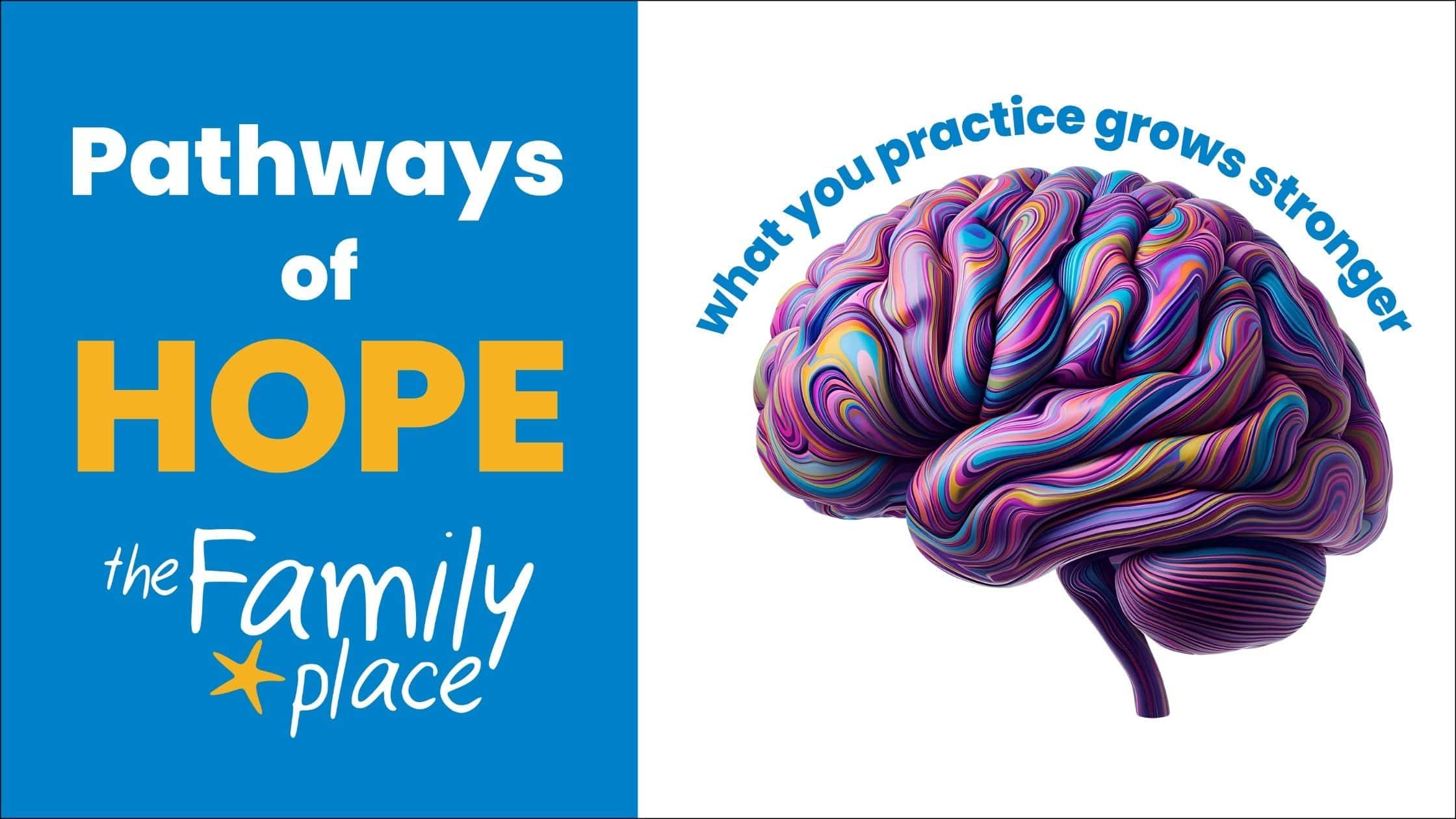
What You Practice Grows Stronger
Every day, without even realizing it, we’re all practicing something. We practice how we start our mornings. We practice how we handle stress in traffic or at work. We even practice how we talk to ourselves when things go wrong.
Over time, those little practices and habits add up. The things we repeat most often, even the small things, are shaping what we do, how we see the world, and who we become.
That’s why the idea of ‘what you practice grows stronger’ is so powerful. Practice doesn’t just build skills, it rewires our brains, our health, and our capacity for resilience.
The Brain’s Power to Rewire
Our brains are constantly changing and reshaping themselves. This process is called neuroplasticity.
Neuroplasticity means the brain is adaptable. It strengthens whatever pathways we use most often. Every repeated thought, behavior, or emotion is like a signal carving a trail through tall, undisturbed grass.
The first time you step through, it’s rough and tangled. But walk the same path over and over again, and it becomes clear, smooth, and automatic. That’s how habits form.
If we practice gratitude, problem-solving, or kindness, those pathways grow stronger. If we practice worry or self-doubt, those grow stronger too. The good news? Because of neuroplasticity, we can choose to rewire. By practicing what we want more of, resilience, creativity, hope, we literally reshape our brains for the better.
Reflection: What is one thought or habit that feels automatic to you because you’ve repeated it so many times? Is it one you want to keep strengthening?
Why the Negative Sticks
There’s a catch: our brains aren’t neutral. They’re wired with what scientists call the negativity bias.
Negative experiences stick with us more strongly than positive ones. One criticism can outweigh ten compliments. A single stressful moment can overshadow everything that went right that day.
This biological wiring once helped out ancestors survive; it made sense to notice threats quickly. But today, negativity bias can keep us stuck in cycles of stress and worry.
That’s why practicing positivity matters. Not to ignore the challenges, but to balance out the natural pull of negativity so that the negative doesn’t dominate the whole picture.
Reflection: Think about your day yesterday. Which stood out more: the hardest moment, or the best? How did that shape your mood?
What Positivity Really Is
Positivity is often misunderstood. It’s not about plastering on a fake smile or pretending everything is fine. That’s toxic positivity, and it doesn’t help.
Real positivity is about balance. It’s the intentional practice of noticing what’s good, what’s working, and what’s possible right alongside whatever is difficult.
When we practice positivity, we aren’t denying reality. We’re widening it.
The Science of Positivity
Researchers have found that practicing positivity changes us in powerful ways:
It broadens our perspective
Psychologist Barbara Fredrickson’s broaden-and-build theory (2001), shows that positive emotions expand our awareness. When we’re stressed, we get tunnel vision. But positivity widens our lens, helping us see more possibilities, think more creatively, and solve problems better.
It lowers stress
Several different studies have shown that positive emotions reduce cortisol, the main stress hormone, which helps our bodies recover faster and maintain better emotional balance (Pressman & Cohen, 2005).
It strengthens our health
Long-term studies from Harvard and the Mayo Clinic, show people with more positive outlooks have lower rates of heart disease, stronger immune systems, longer life expectancy (Kubzansky et al., 2001; Chida & Steptoe, 2008).
It builds resilience
Fredrickson’s later research (2003) shows that positivity creates an emotional reserve that helps us bounce back faster when things go wrong.
Reflection: Think of a time when you were in a genuinely positive mindset, maybe laughing, feeling proud, or grateful. How did it change the way you approached the rest of your day?
From Positivity to Hope
All of this leads to what matters most: positivity sparks hope
Hope is deeper than optimism. Psychologist C.R. Synder defined it as “belief that the future can be better, and that we have the power to influence it” (1994).
Here’s the connection:
- Positivity widens our perspective; we see more than just problems.
- That wider vision fuels hope, because we can imagine a way forward.
- Hope then becomes a motivator, giving us the energy to keep going, even on the hardest of hard days.
In other words, positivity lays the groundwork, but hope is what carries us forward.
Reflection: When you think about your own life right now, at home or at work, what gives you hope?
My Practice of Hope
Over the past year, I have been practicing positivity intentionally. It hasn’t been an easy practice. Some days that practice was as simple as noticing I got to hug my kids, or that I managed to get out of bed.
And what I found is that positivity is more than just finding something good at the end of the day or being cheerful. It’s about building hope.
Hope that tomorrow still has a chance.
Hope that challenges won’t last forever.
Hope that there will still be good to notice, even in the middle of life’s hardest seasons.
That hope, not denial, not fake happiness, has given me the resilience to keep moving through some of the hardest times in my life.
A Challenge for You
So here’s my invitation:
For the next week, practice finding one hopeful thing every day.
Write it down, share it with someone, or just pause to notice it.
Because what you practice does grow stronger. And if we choose to practice hope as individuals, families, and communities we’ll grow stronger together.
Doidge, N. (2007). The Brain That Changes Itself: Stories of Personal Triumph from the Frontiers of Brain Science. Viking Press.
Baumeister, R. F., Bratslavsky, E., Finkenauer, C., & Vohs, K. D. (2001). Bad is stronger than good. Review of General Psychology, 5(4), 323–370.
Fredrickson, B. L. (2001). The role of positive emotions in positive psychology: The broaden-and-build theory of positive emotions. American Psychologist, 56(3), 218–226.
Fredrickson, B. L., Tugade, M. M., Waugh, C. E., & Larkin, G. R. (2003). What good are positive emotions in crisis? A prospective study of resilience and emotions following the terrorist attacks on the United States on September 11th, 2001. Journal of Personality and Social Psychology, 84(2), 365–376.
Pressman, S. D., & Cohen, S. (2005). Does positive affect influence health? Psychological Bulletin, 131(6), 925–971.
Kubzansky, L. D., Sparrow, D., Vokonas, P., & Kawachi, I. (2001). Is the glass half full or half empty? Associations with optimism and cardiovascular risk. Psychosomatic Medicine, 63(6), 910–916.
Chida, Y., & Steptoe, A. (2008). Positive psychological well-being and mortality: A quantitative review of prospective observational studies. Psychosomatic Medicine, 70(7), 741–756.
Snyder, C. R. (1994). The Psychology of Hope: You Can Get There from Here.





0 Comments